
The Luxurious World of Osetra Caviar
Osetra caviar is one of the most luxurious and expensive foods in the world. Renowned for its rich, buttery flavor and golden undertones, Osetra caviar can fetch up to $5,600 for 16 tins. This delicacy comes from the roe of the Osetra sturgeon, a fish that must be carefully raised and managed for at least seven years before its eggs are ready for harvesting.
The Osetra Sturgeon: A Long-Term Investment
To produce Osetra caviar, a single sturgeon has to be raised for at least seven years. During this period, the fish is meticulously cared for to ensure it reaches optimal health and egg production capacity. A mature sturgeon, around 12 years old, is valued at approximately $3,000 to $4,000.
Caviar Production: The Scale and Cost
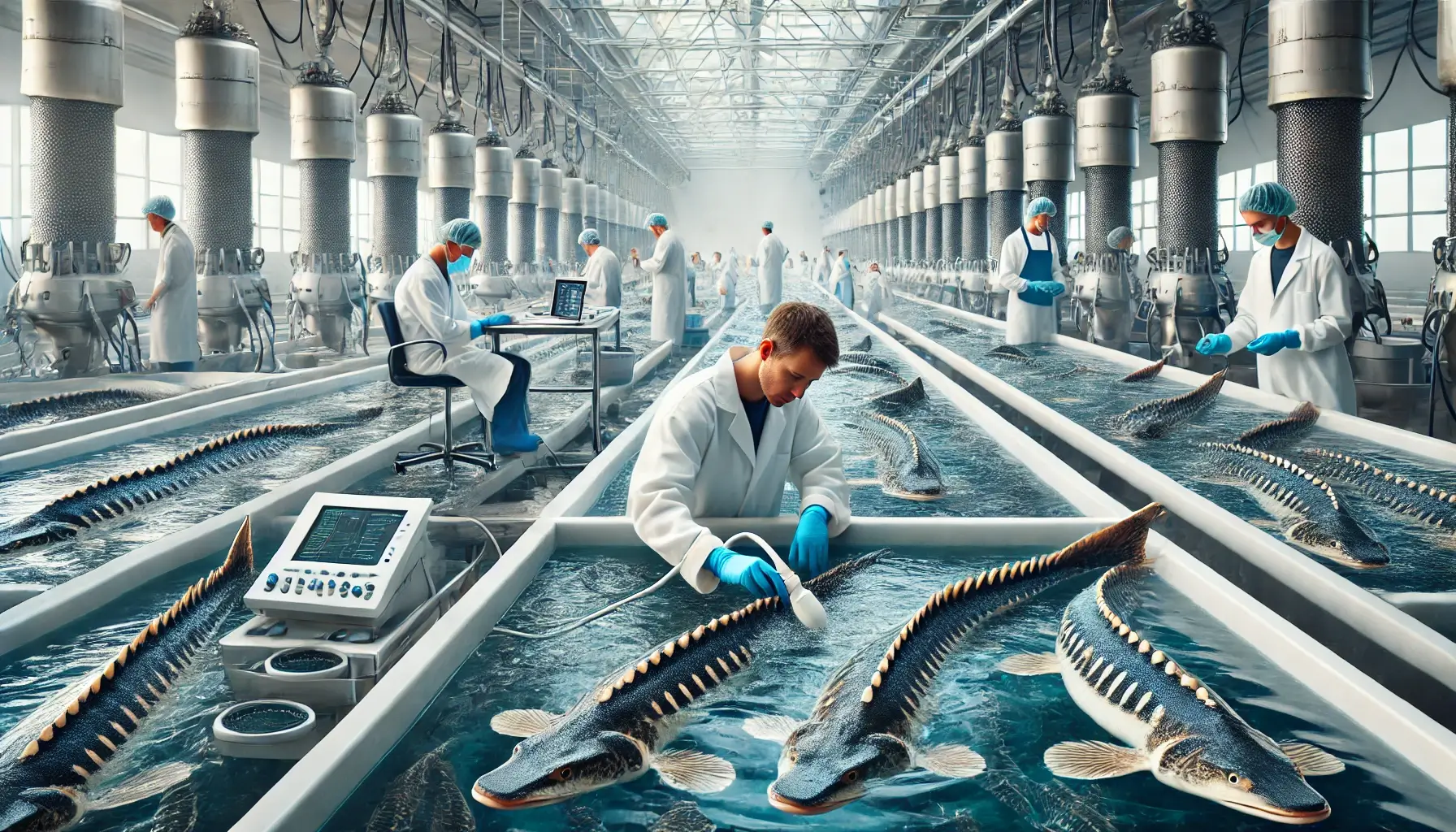
At Marshallberg Farm, one of the premier producers of Osetra caviar, the operation involves raising about 20,000 sturgeons sustainably. This extensive operation comes with significant costs, totaling around $500,000 annually. These costs cover everything from the specialized feed and ultrasound checks to the maintenance of the aquaculture systems that keep the fish healthy.

Aquaculture Systems: The Lifeline of Caviar Farming
The farm uses advanced Recirculating Aquaculture Systems (RAS) to ensure the optimal living conditions for the sturgeons. Each tank holds approximately 40,000 gallons of water and houses around 300 fish. The RAS system filters through a million gallons of water every hour, ensuring clean and oxygenated water for the fish. The cost of maintaining such a system includes the high expense of drum filters, each priced at about $30,000.
Feeding and Gender Sorting: Critical Components
Feeding the sturgeons is a precise process, with the feed designed not to float or disintegrate. The farm uses about 400 pounds of feed per day, costing roughly $72,000 annually. Additionally, identifying the gender of the sturgeons is crucial since only females produce caviar. The process involves raising the fish for up to five years before their gender can be determined, and separating the females for caviar production while the males are used primarily for meat.
Harvesting Caviar: A Delicate Process
Harvesting caviar is a meticulous process that begins with checking the maturity of the eggs through palpation and ultrasound. Once the eggs are deemed ready, the sturgeons are euthanized humanely, and the roe is extracted. The roe is then salted and carefully cleaned before being packed into tins. Each harvest is meticulously labeled and graded based on appearance, texture, and flavor, ensuring only the highest quality caviar reaches the market.
Market Demand and Production Growth
Marshallberg Farm has seen significant growth in its caviar production, doubling its output to 1,500 kilograms in recent years. The U.S. caviar market, valued at $17.8 million in 2018, is increasingly favoring domestically produced caviar over imports. As demand continues to grow, the farm is working towards completing the breeding cycle on-site to ensure a sustainable supply of sturgeon.
Operating an Egg Business: Lessons from Caviar Farming
Using the insights from Marshallberg Farm?s Osetra caviar production, we can draw parallels to operating a high-end egg business. Here?s a breakdown of what it takes to run such a business:
1. Initial Investment
- Purchasing high-quality breeding stock: $3,000 to $4,000 per mature hen.
- Setting up advanced housing and care systems, akin to RAS in aquaculture: $30,000 for specialized equipment.
2. Operating Costs
- Feed costs: Similar to caviar farming, with specialized feed costing around $0.75 per pound. For 300 hens, feeding 400 pounds monthly: $72,000 annually.
- Health and maintenance: Regular health checks and maintaining optimal living conditions.
3. Production and Harvesting
- Time to maturity: Hens need several years to reach peak production.
- Harvesting process: Eggs must be carefully collected, cleaned, and graded.
4. Market and Sales
- Product differentiation: Similar to caviar, eggs can be marketed based on quality, color, and organic certification.
- Grading and packaging: High-quality presentation can command higher prices.
Conclusion
The luxury egg market, much like the caviar industry, requires significant investment in time, resources, and meticulous care. By ensuring optimal conditions and high standards, an egg business can thrive and cater to the growing demand for premium products. Drawing lessons from the world of Osetra caviar, entrepreneurs can build a sustainable and profitable egg business that stands out in a competitive market.